
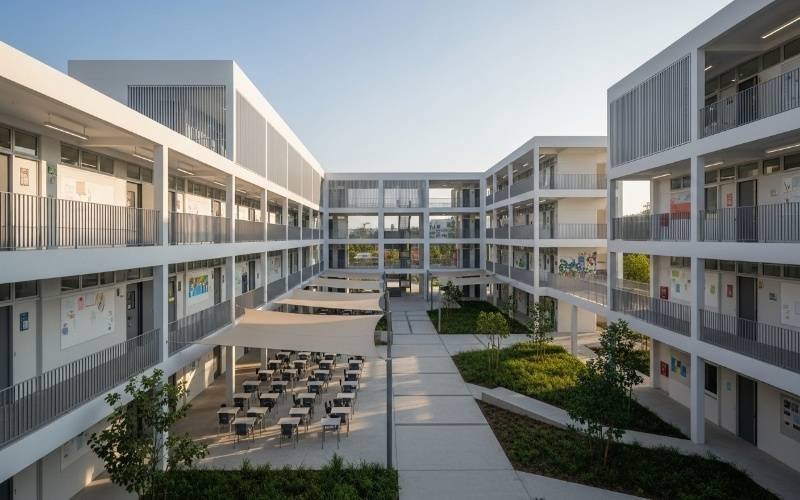
Introduction
Any school or university building is not only about classrooms, long corridors, and a playground. A student who spends almost his whole day at university or school can understand that it is far from these things. In reality these buildings unconsciously shape how students feel, move and learn. That is why the role of a smart school and university building architect is so important.
It’s not about impressive drawings. It is about understanding how learning actually happens in real life.
Learning Is Not Limited to Classrooms
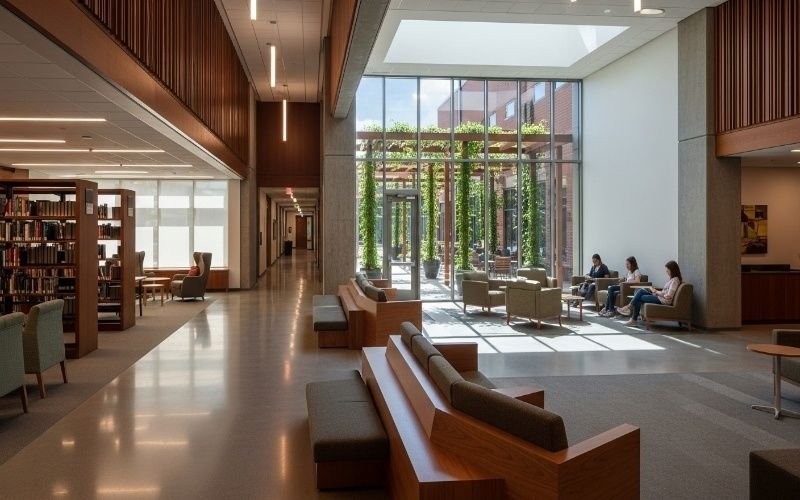
A good school building architect knows that students talk and move in hallways, libraries and shaded outdoor areas. If those spaces feel uncomfortable or cramped, it can affect their mood and mental peace.
At the university level, the responsibility grows. A university building architect has to balance freedom with order. In educational buildings lecture halls, labs, hostels, and social spaces should be designed in a way that they feel connected. Then students move through the building with ease.
What “Smart” Really Means in Educational Design
Smart design isn’t about screens on every wall or complex systems that are hard to maintain. In practice, a smart school and university building architect focuses on choices that quietly make life easier.
With smart classroom design you can change furniture and layouts without stress. Only with student-centered learning spaces you can support discussions, group work, and focused study. These small design decisions make students feel comfortable and confident in their environment.
Function Comes Before Form
An experienced building architect understands something very simple: if a building does not work well, it does not matter how beautiful it looks.
Functional academic buildings reduce noise, confusion, and overcrowding. Clear circulation planning in schools helps students move safely between classes.
Planning Campuses That Can Grow

Educational buildings are rarely finished forever. Schools expand. Universities add departments. Because of this, a thoughtful campus design architect always plans ahead.
Campus planning and zoning help future buildings fit in naturally. Open spaces are protected for outdoor learning spaces and student activities.
Comfort, Safety, and Everyday Use
A professional educational architect pays attention to comfort because in an uncomfortable space learning is impossible. Natural light and ventilation in classrooms reduce fatigue. Wide open corridors and clear paths offer safe and accessible school design.
It has been observed that in a calm and comfortable environment students can focus better and it also supports good behaviour.
Sustainability That Makes Practical Sense
Schools and universities stayed functional for decades. That is why their energy bills, maintenance, and repairs come quickly. So sustainable architecture for education is a practical choice.
A smart school and university building architect considers the following:
1. Orientation.
2. Materials.
3. Airflow.
4. Shading from the start.
Educational buildings that are designed in a way that are energy-efficient cost less to operate and give more comfort to students.
Designing Spaces That Can Adapt
Education changes faster than buildings do. Teaching styles evolve. Technology shifts. New programs appear. A skilled institutional building architect understands this reality and design accordingly.
With the help of flexible learning environments you can use spaces in different ways without going for renovation.
How Highland Arch Studio Approaches Educational Design
At Highland Arch Studio, educational projects begin with listening. Not just to planners and administrators, but to how students and teachers actually use space.
As an education infrastructure architect, the studio focuses on clarity, durability, and everyday function. Their learning facility design services create those buildings that are easy to use. Every corridor, classroom, and outdoor space is designed in a way which can work together.
Designing for Daily Student Life, Not Just Academic Schedules
One thing that often gets overlooked in educational architecture is how much time students actually spend outside structured class hours. A school or university building is not only active during lectures. It stays alive during breaks, early mornings, late evenings, and exam seasons.
A thoughtful smart school and university building architect designs for these moments too. Seating areas where students can wait comfortably. Quiet corners for reading. Informal gathering spots that don’t interrupt others. These spaces support student well-being in subtle ways.
In many projects, Highland Arch Studio pays attention to these in-between moments.
Balancing Control and Freedom in Educational Buildings
Educational buildings carry a unique responsibility. They must guide behavior without feeling restrictive. Too much control makes spaces feel rigid. Too much freedom creates confusion. Finding that balance is where real architectural judgment comes in.
A skilled educational building architect understands how design can influence movement and behavior without signs or instructions. Clear circulation planning in schools helps students know where to go. Natural visual connections reduce the need for supervision. Logical layouts support independence while maintaining safety.
While at the university level, this balance becomes even more important. Students need freedom to explore and work independently. A campus design architect uses spatial hierarchy while keeping the campus easy to navigate.
Highland Arch Studio approaches this balance carefully. Instead of forcing behavior through design, the studio creates environments that gently guide it. As a result, spaces feel calm, respectful, and easy to understand even for first-time users.
Case Study: Designing a Smart and Functional Academic Campus with Highland Arch Studio
Project Background
Highland Arch Studio was approached by an educational trust planning a new academic campus that would include a school block and a small university-level learning facility. The client had a clear concern from the start. They want a building that works well in daily use.
Their existing campus was having problems with circulation and overcrowded corridors. Over time, these issues affected both teaching flow and student comfort. The goal this time was different. They wanted a campus that felt calm, intuitive, and ready for long-term growth.
Understanding the Real Problem
Instead of starting with layouts, the team at Highland Arch Studio focused on how the campus would actually function each day. Discussions included:
- How students move between classes during short breaks.
- Where congestion usually builds up.
- How teachers use shared facilities.
- How outdoor spaces are used throughout the year.
It became clear that the issue was not space shortage, but how space was organized. The client needed a smart school and university building architect who could translate daily academic life into practical design decisions.
Design Approach and Planning Strategy
Highland Arch Studio approached the project as a complete learning environment rather than a collection of buildings. Campus planning and zoning were handled carefully to separate quiet academic zones from active shared areas.
Classrooms were designed while keeping in mind student’s learning. A special focus was given to natural light and ventilation.
Flexible learning environments were introduced for lectures, group work, and independent study.
Key Design Decisions
Several small but meaningful decisions shaped the project:
- Academic blocks were positioned to receive balanced daylight.
- Outdoor learning spaces were connected visually to indoor areas.
- Clear circulation paths reduced unnecessary crossings.
- Shared facilities were centrally placed for equal access.
Sustainable architecture for education was integrated quietly, focusing on energy-efficient academic buildings rather than visible technology.
The Result
Once the campus became operational, the difference was immediately noticeable. Students moved more comfortably and teachers reported better classroom focus without any disruptions. Shared areas felt active but not noisy.
The client described the campus as “easy to understand,” which reflected the studio’s intent. The buildings did not demand attention. They simply worked.
What This Project Reflects About Highland Arch Studio
This case study reflects how Highland Arch Studio approaches educational architecture. The focus is never only on form or trends. It is about listening, observing, and designing spaces that support real academic life.
Final Thoughts
A smart school and university building architect is about how people will experience learning. Good educational architecture stays quiet. It supports focus, movement, safety, and growth without demanding attention.
When a school or university is designed with real understanding, it becomes more than a building. It becomes a place where learning feels natural and that is where meaningful education begins. If you are planning to build any building like that consult Highland Arch Studio. We will guide you the right way throughout the process.
FAQs
Educational buildings work differently from homes and offices. In educational institutes class timings are fixed, spaces must support each other. A specialist architect understands this thing. And design a building in a way to prevent it from getting overcrowded and confusing. Which improves the overall learning environment.
Smart design focuses on students and teachers, that is how they use spaces. With well-planned circulation you can reduce stress during transitions. Natural light improves concentration and students can learn better.
Yes, A smart school and university building architect plans service routes, and circulation in a way through which you can go for future expansions.
Yes, because educational buildings operate for long hours every day. Sustainable design is not about expensive features, it is all about making thoughtful, practical choices.
Highland Arch Studio begins by understanding how learning happens in real life. Instead of copying trends they focus on functionality, comfort, and long-term use.